ERA Wallet vs Ledger and Trezor: Testing an Air-Gapped Newcomer Against the Market Leaders
- 21st November 2026
- Crypto PR
Hardware wallets address one of crypto’s oldest problems: how to keep private keys away from malware, phishing and compromised phones. Ledger and Trezor have set the standard for this market for more than a decade. But in 2026, users lose funds less often to hacked chips and more often to a transaction they approved without being able to read it. Many have seen a “Blind signing ahead” warning on their wallet screen, tapped “Accept risk and continue” and approved without knowing what they were actually signing.
Crypto Breaking News received ERA Wallet for testing – an air-gapped, bank-card-sized wallet from a Dubai-based team – and compared it with current models from the two market leaders: Ledger Flex and Trezor Safe 5. The focus is on three things: verifying transactions before signing, backup and recovery, and managing multiple wallets.
Key takeaways
- All three devices keep keys offline; the main difference is how clearly each device shows the transaction you are signing.
- Clear Signing on Ledger and Trezor works for contracts listed in their registries. ERA Lens decodes transactions on the device itself, offline, and explicitly flags risks, including delegatecall.
- The ERA team publicly described a PIN-encrypted NFC backup as early as 2023; Ledger introduced a similar Recovery Key card in 2025.
- ERA can store up to 10 independent seed phrases on a single device; on Ledger and Trezor, additional wallets are created with a passphrase on top of one seed phrase.
- ERA has undergone independent audits by Keylabs and Cure53. No published third-party device audit reports exist for Ledger Flex or Trezor Safe 5: the manufacturers rely on chip certification and, in Trezor’s case, on open-source code.
The contenders
Ledger is the best-selling hardware wallet maker; the company was founded in France in 2014. Its 2026 lineup runs from the Nano S Plus at $79 to the Stax at $399, and the touchscreen Ledger Flex at $249 was chosen for this test. All models use a certified Secure Element and the Ledger Wallet app (formerly Ledger Live).
Trezor is the open-source pioneer: Czech company SatoshiLabs released the first Trezor in 2014. The current lineup is the Safe 3 ($59), Safe 5 ($129) and Safe 7 ($249); the Safe 5, with its color touchscreen, was selected for comparison.
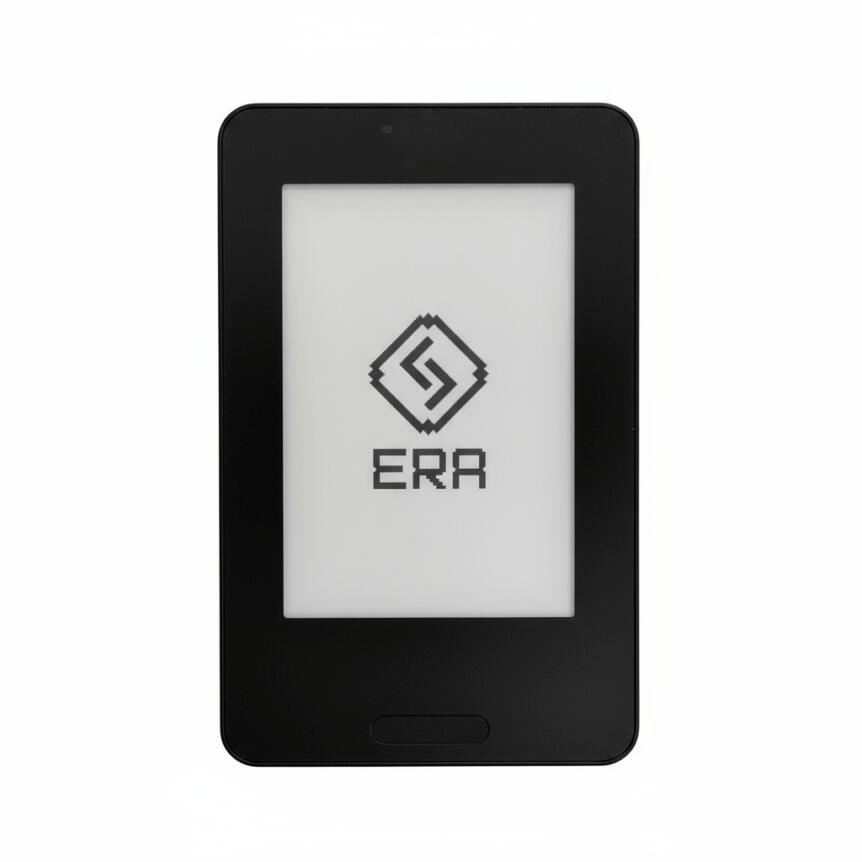
ERA Wallet is the newcomer: development began in 2022, and the device went on sale in March 2025. It is designed for users of every level, from beginners to experienced DeFi users. Its built-in ERA Lens engine decodes transactions offline directly on the device and warns about risks, and a single device can hold up to 10 independent seed phrases. Price: $226.
Specs at a glance
Official store prices as of November 2026.
| Specification | Ledger Flex | Trezor Safe 5 | ERA Wallet |
|---|---|---|---|
| Price (USD) | $249 | $129 | $226 |
| Screen | 2.84″ E Ink touchscreen, no backlight | 1.54″ color touchscreen, backlit | 2.7″ E Ink touchscreen, front-lit |
| Connectivity | USB-C, Bluetooth, NFC | USB-C | Air-gapped signing via QR or NFC tap (Tap Sign) |
| Transaction verification | Clear Signing for supported apps and contracts | On-device review; Clear Signing on supported dApps | ERA Lens decodes on device, offline; extra protection with risk warnings |
| Backup | 24-word seed; Recovery Key card or paid Ledger Recover | 12/20/24-word seed or multi-share | PIN-protected ERA cards, including Shamir multi-share across several cards, or paper (12/24 words) |
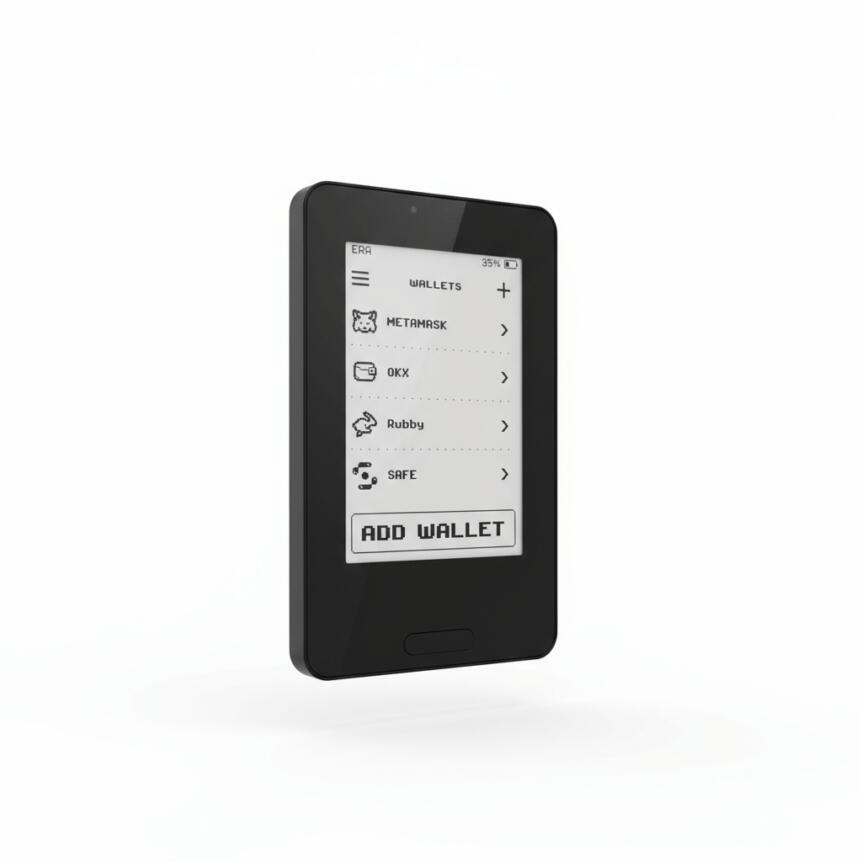
| Separate wallets | Hidden wallets via passphrase | Hidden wallets via passphrase | Up to 10 wallets with independent seed phrases |
| Open source | Partial | Yes (core firmware) | Partial; code release planned for Q4 2026 |
| Independent audit | No published device audit; chip certified (CC EAL6+). Ledger Stax holds an ANSSI CSPN certificate | No published commissioned audit; open-source code available for researchers to review | Keylabs (device), Cure53 (white-box audit of the software wallet, 2026) |
Sources: Ledger, Trezor, ERA user guide, audits: Ledger Flex, Trezor Safe 5.
What users see before they sign
This is where the three devices differ most, and where most real-world losses happen. Blind signing means approving a smart-contract call displayed as a string of hex characters or a vague summary. Wallet drainers are built on it.
Ledger has been developing Clear Signing on its touchscreen models. It works for apps and contracts described in Ledger’s registry. When a contract is not listed, the Ethereum app asks the user to enable blind signing in its settings, and the user ends up approving data they cannot read.
Trezor shows the recipient, amount and fee, and for supported dApps a decoded call. For other contracts, the screen mostly shows raw call data.
The common weakness of registry-based approaches is that verification only works if the contract has been described in advance. Complex requests with nested calls, such as a delegatecall inside a multicall, usually come down to a generic summary or raw data on these devices – and that is exactly where drainers tend to hide.
ERA Wallet takes a different approach. ERA Lens parses the request directly on the device, offline and without querying an external registry, and displays the function, amounts, recipient and fee in plain language. Dangerous elements, including delegatecall, unlimited approvals to unknown addresses and account delegation to a contract, are flagged explicitly, and a risk summary opens before a dangerous transaction can be signed. The ERA app also simulates the transaction before
sending it to the device. According to the company, ERA Lens coverage of networks and protocols expands with every firmware update.
Backup: from paper to encrypted cards
A 24-word seed phrase written on paper remains the industry standard and, at the same time, its weak spot: it can be photographed, lost or burned.
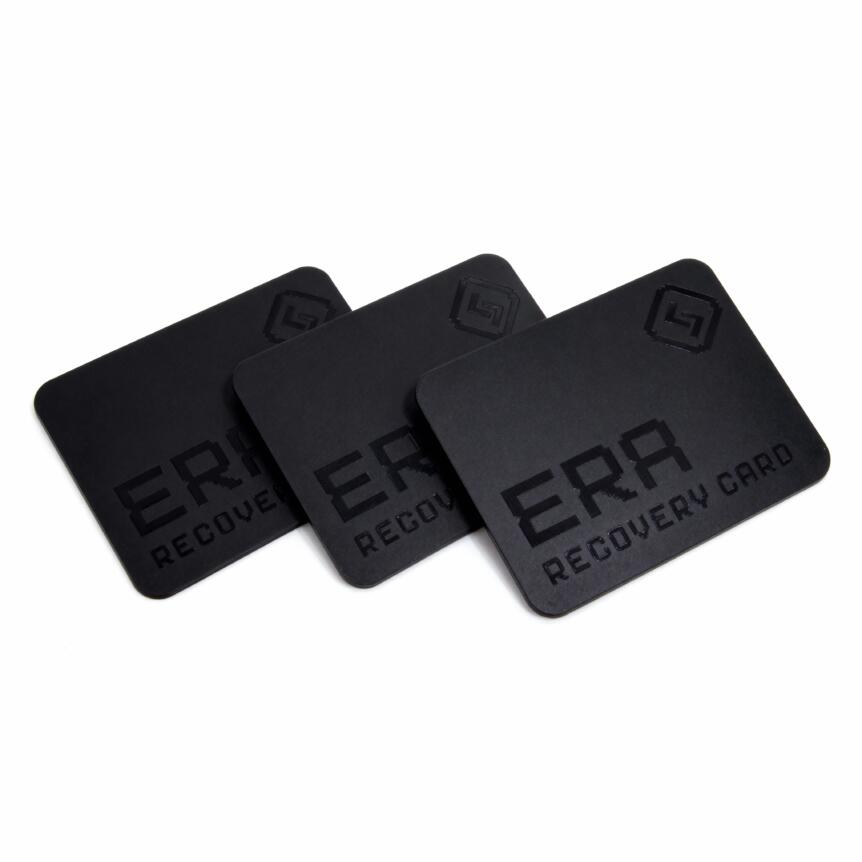
ERA Wallet was among the first to offer an alternative to paper. The team publicly described a PIN-encrypted NFC backup as early as 2023, while the device was still in development, and the cards went on sale together with the device in March 2025. A card cannot be read without its PIN, three are included in the box, and for larger holdings there is a multi-share mode: the backup is split across several NFC cards using Shamir’s scheme, so that, for example, any 2 of 3 cards restore the wallet while a single card reveals nothing on its own. It is the same Shamir backup principle, only the shares live on secure cards instead of paper. A classic 12- or 24-word paper phrase is still available, and the words can be read back from a card, so users are not locked into a single vendor.
Ledger arrived at a similar idea later: the Recovery Key card was announced in June 2025 and went on sale in July, initially only for the Flex and Stax. Ledger’s foundation is still the 24-word seed phrase, while the paid Ledger Recover service stores an encrypted copy with partners after identity verification.
Trezor supports a standard seed phrase and also offers multi-share (Shamir backup): the backup is split into several shares, each written down as words on paper and stored in a separate place.
Multiple wallets on one device
Security-conscious users increasingly keep one wallet for DeFi and airdrops and a separate one for savings. If a risky approval goes wrong, only one of them is exposed.
On Ledger and Trezor, this is usually done with a passphrase: hidden wallets are derived from the same seed phrase. The setup works, but every wallet depends on a single seed phrase plus a password that must not be forgotten.
ERA Wallet lets users create up to 10 wallets on one device, each with its own independent seed phrase. Compromising one does not affect the others, and there is no need to buy multiple devices. Any wallet can additionally be protected with a passphrase or a separate wallet password on top of the device PIN.
Connectivity and compatibility
Every connection channel is both a convenience and a potential attack surface. Ledger Flex works over USB-C, Bluetooth and NFC. Trezor Safe 5 connects by cable only, and within the Trezor lineup Bluetooth is available only on the flagship Safe 7.
ERA Wallet does without USB, Wi‑Fi and Bluetooth. Transactions are signed via QR code or, with Tap Sign enabled, with two taps of the phone over NFC in the ERA app; in both cases ERA Lens shows the same review screen.
| Feature | Ledger Flex | Trezor Safe 5 | ERA Wallet |
|---|---|---|---|
| Signing channel | USB-C, Bluetooth | USB-C | QR or NFC (Tap Sign) |
| Bitcoin-only firmware | No | Yes | Yes, switchable at any time |
| Bitcoin multisig | Yes | Yes | Yes |
| Third-party wallet support | MetaMask, Rabby and others | MetaMask, Rabby and others | MetaMask, Rabby and others |
| Water resistance | Not stated | Not stated | IP67 |
| Wireless charging | Qi | No battery | Qi |
What it means for users
All three devices reliably isolate keys from phones and computers. The differences appear at the moment of signing and when recovering access: how clearly the device shows what you are approving, and how flexible the backup options are.
For anyone who regularly uses DeFi, signs approvals and interacts with new contracts, transaction verification is what determines whether their funds stay safe.
Get ERA Wallet: https://era-wallet.com/products?ref=CRYPTO, discount code CRYPTO.
This article was originally published as ERA Wallet vs Ledger and Trezor: Testing an Air-Gapped Newcomer Against the Market Leaders on Crypto Breaking News – your trusted source for crypto news, Bitcoin news, and blockchain updates.